
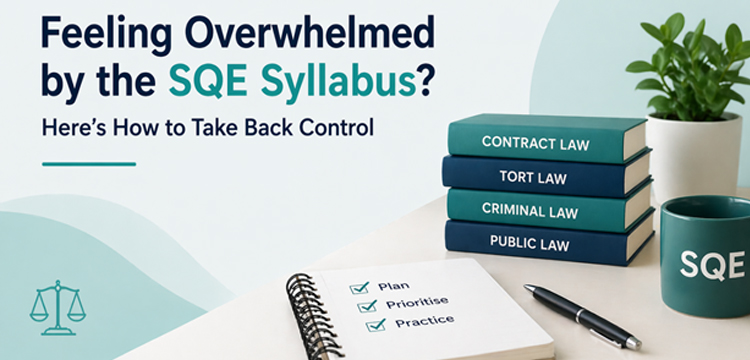
One of the most common challenges faced by SQE candidates is the overwhelming nature of the syllabus. With a wide range of legal subjects to cover and limited time to prepare, many students feel lost before they even begin. This sense of overload often leads to procrastination, inconsistent study habits, and a lack of confidence in their preparation.
The Solicitors Qualifying Examination, introduced by the Solicitors Regulation Authority, is designed to test functioning legal knowledge across multiple areas of law. The breadth of content is intentional, ensuring that candidates are well-prepared for real legal practice. However, without the right strategy, it can feel difficult to manage.
The first step in overcoming this challenge is changing how you view the syllabus. Instead of seeing it as one large, unmanageable task, it is far more effective to break it down into smaller, structured sections. Dividing subjects into topics and subtopics makes the workload more approachable and allows you to focus on one area at a time. This shift in perspective can immediately reduce stress and improve clarity.
Another key factor is prioritisation. Not all topics carry the same weight or level of difficulty, and trying to give equal attention to everything can be inefficient. Identifying high-yield areas and focusing your efforts where they will have the greatest impact helps you make better use of your time. This does not mean ignoring other topics, but rather approaching your revision strategically.
Creating a realistic study plan is essential for regaining control. Many students make the mistake of overloading their schedules, which leads to burnout and inconsistency. A well-balanced plan that spreads topics over time and includes regular review sessions is far more effective. Consistency, rather than intensity, is what leads to long-term retention and confidence.
Practice also plays a crucial role in managing the syllabus. Instead of waiting until you have covered all topics, incorporating practice questions early in your preparation helps reinforce learning and improves understanding. It also highlights weak areas, allowing you to adjust your study plan accordingly.
Managing stress is equally important. Feeling overwhelmed often comes from a lack of structure and clarity. As your preparation becomes more organised, your confidence naturally increases. Taking regular breaks, maintaining a healthy routine, and avoiding comparison with others can further help in maintaining a positive mindset.
It is also important to accept that you do not need to know everything perfectly. The SQE tests your ability to apply knowledge, not achieve perfection. Focusing on understanding key principles and practising their application is far more effective than trying to memorise every detail.
Feeling overwhelmed by the SQE syllabus is a common experience, but it is also manageable with the right approach. By breaking down the content, prioritising effectively, maintaining consistency, and focusing on practical application, you can take control of your preparation and move forward with confidence.