
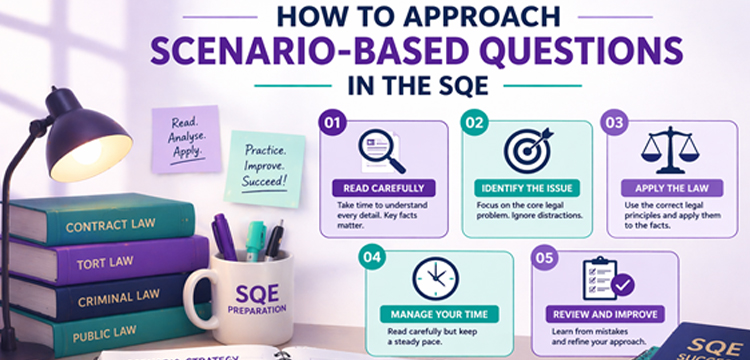
One of the defining features of the SQE is its focus on scenario-based questions, which test not only legal knowledge but the ability to apply that knowledge in practical situations. Many candidates find these questions challenging because they require careful analysis, critical thinking, and precise application of legal principles. Understanding how to approach them effectively can significantly improve performance.
The Solicitors Qualifying Examination, introduced by the Solicitors Regulation Authority, is designed to reflect real-life legal practice. This means that questions are often presented as realistic scenarios rather than straightforward theoretical problems. Candidates must identify the relevant legal issue, interpret the facts correctly, and apply the appropriate law to reach the best possible answer.
A common mistake is rushing through the scenario without fully understanding the details. These questions often include key facts that are essential to determining the correct answer. Missing even a small detail can lead to selecting the wrong option. Taking the time to read carefully and identify important information is a crucial first step in improving accuracy.
Another challenge is recognising the legal issue being tested. Scenario-based questions may include irrelevant information designed to distract candidates. Developing the ability to filter out unnecessary details and focus on the core issue is essential. This skill improves with practice, as candidates become more familiar with how questions are structured.
Applying the law correctly is equally important. It is not enough to simply recall legal principles; candidates must understand how those principles operate in different contexts. This requires a deeper level of understanding and the ability to think critically. Regular practice with a wide range of questions helps build this skill and increases confidence.
Time management also plays a significant role. Spending too long analysing one scenario can affect your ability to complete the entire exam. Developing a balanced approach, where you read carefully but also maintain a steady pace, is key to performing well under exam conditions.
Reviewing mistakes is one of the most effective ways to improve. By analysing incorrect answers, candidates can identify whether the error was due to misunderstanding the facts, misapplying the law, or rushing through the question. This reflection helps refine both knowledge and technique over time.
Consistency in practice is essential for mastering scenario-based questions. The more exposure candidates have to different types of scenarios, the more comfortable they become with identifying patterns and applying legal reasoning. Over time, this leads to improved accuracy and greater confidence in tackling even the most complex questions.