
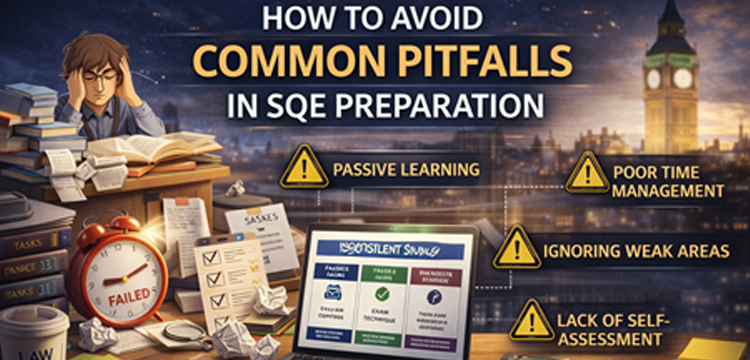
Preparing for the SQE is a demanding process that requires more than just dedication and long study hours. Many candidates begin their preparation with strong motivation but still struggle to achieve the results they expect. This is often due to common mistakes that can slow progress and reduce overall performance. Understanding these pitfalls early can help students adopt a more effective and strategic approach to their studies.
The Solicitors Qualifying Examination, introduced by the Solicitors Regulation Authority, is designed to assess both legal knowledge and the ability to apply it in practical scenarios. One of the most common mistakes students make is relying too heavily on passive learning methods such as reading textbooks or highlighting notes. While these methods can help build a basic understanding, they are not sufficient for mastering the application-based nature of the SQE. Candidates who fail to actively test their knowledge often struggle when faced with exam-style questions.
Another frequent issue is inconsistent study habits. Some students study intensively for short periods and then lose momentum, which leads to gaps in knowledge and reduced retention. Consistency is far more effective than occasional bursts of effort. A steady and structured routine allows students to build and reinforce their understanding over time, making it easier to recall information during the exam.
Time management is also a major challenge. Many candidates spend too much time on topics they are comfortable with while avoiding areas they find difficult. This creates an imbalance in preparation and leaves critical gaps in knowledge. A more effective approach is to identify weaker areas early and allocate extra time to improving them, while still maintaining regular review of stronger topics.
Another pitfall is neglecting exam technique. Some students assume that knowing the law is enough to succeed, but the SQE requires candidates to apply knowledge quickly and accurately under time pressure. Without practising under timed conditions, students may struggle to complete the exam or make avoidable mistakes. Developing strong exam technique through regular practice is essential for achieving a high score.
A lack of self-assessment can also hinder progress. Students who do not regularly review their performance may continue repeating the same mistakes without realising it. Taking the time to analyse incorrect answers and understand the reasoning behind them is one of the most effective ways to improve. This process helps refine both knowledge and approach, leading to better results over time.
Finally, many candidates underestimate the importance of maintaining balance during preparation. Studying for long hours without breaks can lead to burnout, reduced focus, and lower productivity. A balanced routine that includes rest, exercise, and time away from study is essential for maintaining motivation and mental clarity throughout the preparation period.
Avoiding these common pitfalls can significantly improve your SQE preparation. By focusing on active learning, maintaining consistency, managing time effectively, and developing strong exam technique, you can approach the exam with greater confidence and a higher chance of success.